
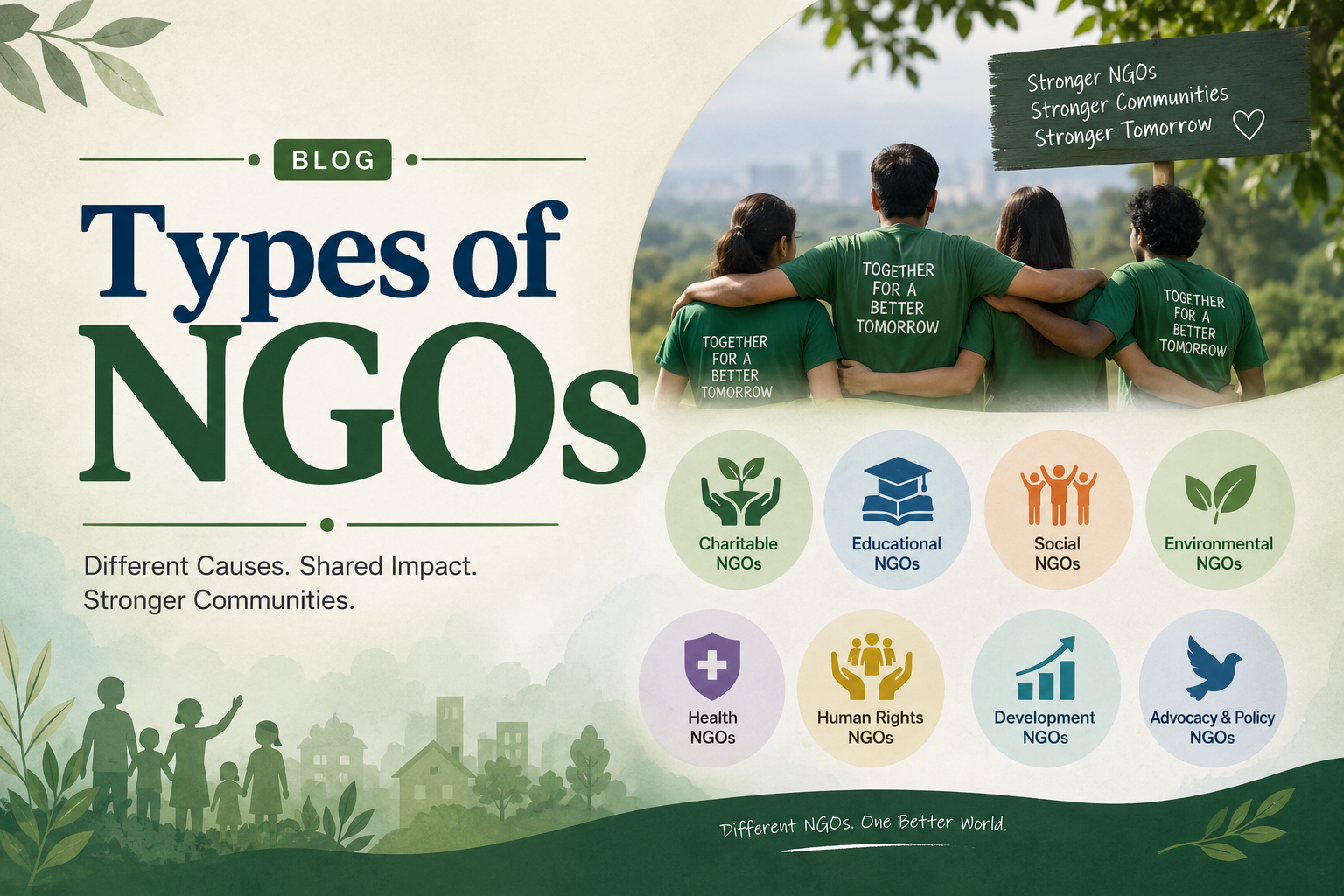
Types of NGOs in India: A Complete Guide to Understanding Different NGO Categories
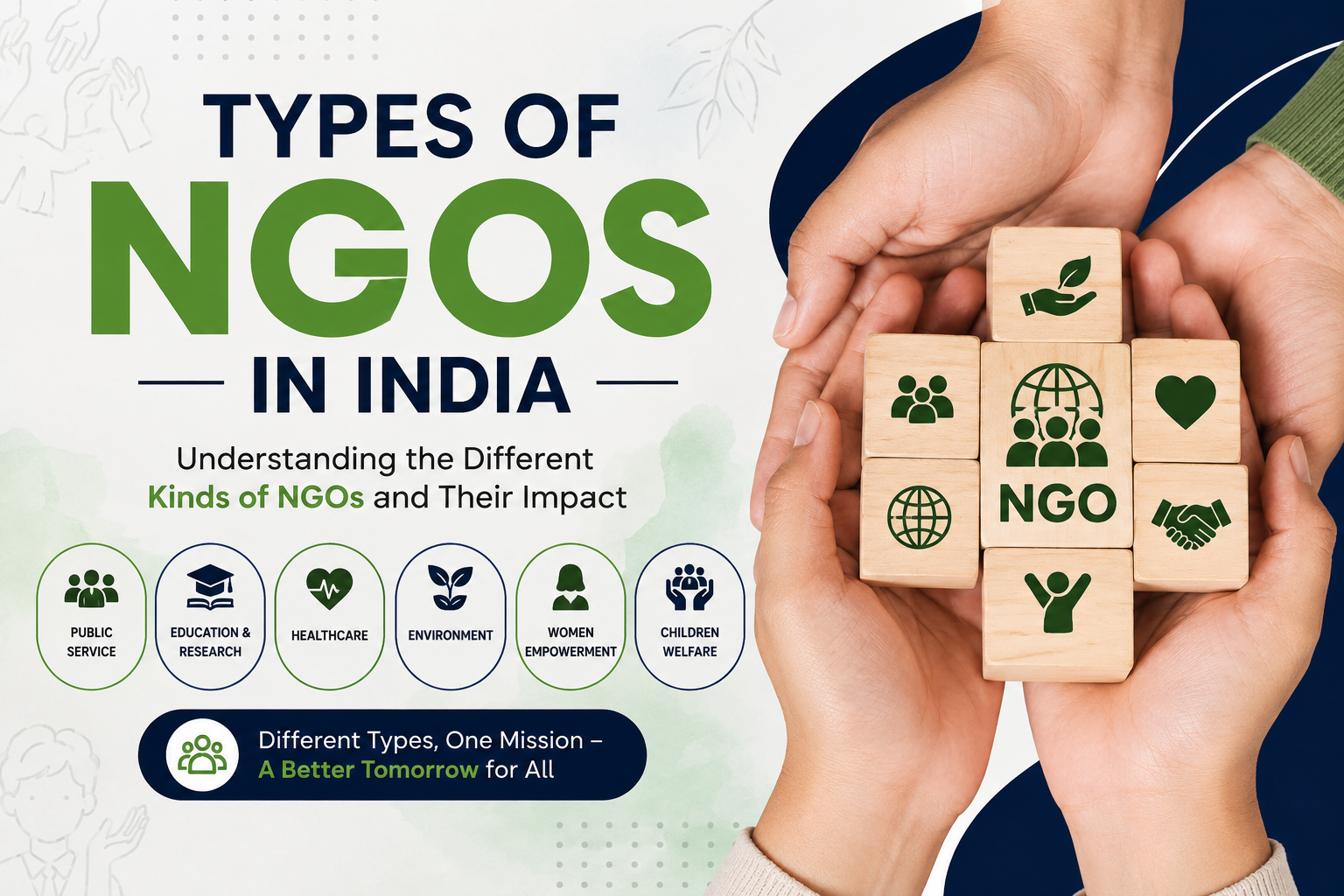
India is home to thousands of Non-Governmental Organizations (NGOs) that are creating meaningful change across the country. From improving access to education and healthcare to empowering women, protecting the environment, supporting rural communities, and uplifting underprivileged children, NGOs play a vital role in building a stronger and more inclusive society. Their dedication, innovation, and community-driven approach help bridge the gap between public needs and available resources, making a lasting impact on millions of lives.
However, not all NGOs operate in the same way. They differ in their objectives, legal structure, areas of focus, and methods of implementation. Understanding the types of NGOs in India is essential for anyone interested in volunteering, donating, partnering through CSR initiatives, or establishing a nonprofit organization. Each type of NGO serves a unique purpose and addresses specific social challenges, contributing to India’s overall development in its own way.
In this comprehensive guide, you’ll learn about the different types of NGOs in India, how they are classified, their key functions, and the positive impact they create across various sectors. Whether you’re a student, social worker, donor, entrepreneur, or simply someone who wants to understand the nonprofit sector, this article will help you gain a clear and practical understanding of the NGO landscape in India.
What is an NGO?
A Non-Governmental Organization (NGO) is a non-profit organization that works independently to address social, educational, environmental, cultural, or humanitarian issues. Unlike businesses, NGOs do not operate with the primary objective of earning profits. Instead, they aim to create positive social impact by serving communities and addressing real-world challenges.
Many NGOs collaborate with governments, private companies, volunteers, and donors to implement projects that improve people’s lives. They often work in areas where additional support is needed and help bridge the gap between communities and essential services.
Understanding the Different Types of NGOs in India
There are several ways to classify NGOs in India. Some are categorized according to their legal registration, while others are classified based on the causes they support.
Let’s understand each category in detail.
1. NGOs Based on Legal Structure
The legal structure determines how an NGO is registered and governed in India.
Trust
A Public Charitable Trust is one of the oldest and most common forms of NGO registration. Trusts are generally established to support charitable causes such as education, healthcare, poverty alleviation, and religious activities.
A trust is managed by trustees who ensure that the organization’s objectives are fulfilled responsibly and transparently.
Common Areas of Work
- Education
- Healthcare
- Rural development
- Community welfare
- Charity programs
Society
A Society is registered under the Societies Registration Act, 1860. This structure is suitable for organizations working in education, literature, science, culture, sports, and social welfare.
Societies are governed by a managing committee elected by its members and usually involve collective decision-making.
Common Areas of Work
- Education
- Arts and culture
- Youth development
- Skill training
- Community awareness
Section 8 Company
A Section 8 Company is registered under the Companies Act, 2013. It is a non-profit company established to promote charitable objectives without distributing profits among members.
This structure offers greater transparency and is often preferred by larger organizations working on national-level initiatives.
Common Areas of Work
- Education
- Healthcare
- Research
- Environmental protection
- Corporate Social Responsibility (CSR) projects
2. NGOs Based on Their Area of Work
Another way to understand the type of NGO in India is by looking at the sectors in which they operate.
Educational NGOs
Educational NGOs focus on improving access to quality education for children, youth, and adults. Their initiatives may include scholarship programs, digital education, school infrastructure, teacher training, and literacy campaigns.
Their goal is to ensure that education reaches every section of society regardless of economic background.
Healthcare NGOs
Healthcare NGOs work to improve public health through medical camps, awareness campaigns, vaccination drives, nutrition programs, and access to affordable healthcare services.
Many organizations also support maternal health, child healthcare, mental wellness, and disease prevention.
Women Empowerment NGOs
These NGOs promote gender equality by supporting women through education, vocational training, legal awareness, entrepreneurship programs, financial literacy, and self-help groups.
They strive to create opportunities that help women become economically and socially independent.
Child Welfare NGOs
Child-focused organizations work to protect children’s rights and ensure their access to education, nutrition, healthcare, and a safe environment.
Their programs often support orphaned children, underprivileged communities, and children facing abuse or exploitation.
Environmental NGOs
Environmental NGOs dedicate their efforts to protecting natural resources and promoting sustainable living. Their work may include tree plantation drives, water conservation, waste management, climate awareness, biodiversity conservation, and pollution control.
These organizations play an important role in encouraging communities to adopt environmentally responsible practices.
Rural Development NGOs
India’s villages face several developmental challenges. Rural development NGOs work to improve livelihoods by promoting agriculture, sanitation, clean drinking water, infrastructure, skill development, and employment opportunities.
Their initiatives contribute to the overall growth of rural communities.
Disaster Relief NGOs
Natural disasters often require immediate humanitarian assistance. Disaster relief NGOs provide emergency food supplies, medical support, temporary shelter, rehabilitation services, and long-term recovery programs for affected communities.
Their quick response helps people rebuild their lives after crises.
Why Are Different Types of NGOs Important?
Every social issue requires a unique approach and specialized expertise. This is why different types of NGOs exist.
For example, an organization working in education may not have the resources to provide emergency disaster relief, while an environmental NGO may specialize in climate conservation rather than healthcare.
By focusing on specific causes, NGOs can develop better strategies, build expertise, and create long-lasting impact within their chosen field.
How to Choose the Right NGO to Support
If you plan to donate, volunteer, or partner with an NGO, consider the following factors:
- Understand the NGO’s mission and objectives.
- Check whether the organization is legally registered.
- Review its transparency and annual reports.
- Learn about its ongoing projects and achievements.
- Ensure that your values align with its cause.
Supporting a trustworthy NGO helps ensure that your contribution reaches the people who need it most.
The Role of NGOs in India’s Development
NGOs have become an essential part of India’s development journey. They complement government efforts by reaching underserved communities and addressing challenges at the grassroots level.
From promoting education and healthcare to protecting the environment and empowering marginalized communities, NGOs create meaningful change across urban and rural India.
They also encourage citizen participation by providing opportunities for volunteering, community engagement, and social responsibility.
How Anupama Foundation Contributes to Social Change
At Anupama Foundation, we believe that sustainable development begins with empowering people and strengthening communities. Through our social initiatives, we strive to create opportunities that improve lives, encourage education, support community welfare, and promote inclusive growth.
Our mission is to work with compassion, transparency, and dedication so that every initiative creates a lasting and meaningful impact. By collaborating with volunteers, donors, and community partners, we continue working towards building a healthier, more educated, and empowered society.
Conclusion
Understanding the type of NGO in India helps individuals make informed decisions when choosing where to volunteer, donate, or seek support. Whether an NGO focuses on education, healthcare, women empowerment, child welfare, environmental protection, or rural development, each organization contributes uniquely to the nation’s progress.
As social challenges continue to evolve, NGOs remain an important force in driving positive change and creating opportunities for communities across the country. By supporting credible organizations and participating in social initiatives, each one of us can contribute to building a stronger, more inclusive, and compassionate India.
Frequently Asked Questions (FAQs)
1. What are the main types of NGOs in India?
The main types include Trusts, Societies, and Section 8 Companies. NGOs are also categorized based on their work, such as education, healthcare, environment, women empowerment, child welfare, and rural development.
2. Which legal structure is best for an NGO?
The choice depends on the organization’s objectives, scale of operations, governance requirements, and long-term goals.
3. Can NGOs receive donations from the public?
Yes. Registered NGOs can receive donations from individuals, businesses, and institutions, subject to applicable laws and regulations.
4. How do NGOs help society?
NGOs address social issues by providing education, healthcare, livelihood support, environmental conservation, disaster relief, and community development programs.
5. Why is it important to understand the type of NGO in India?
Knowing the different categories helps donors, volunteers, and beneficiaries identify organizations that best match their interests and social objectives.