
Introduction
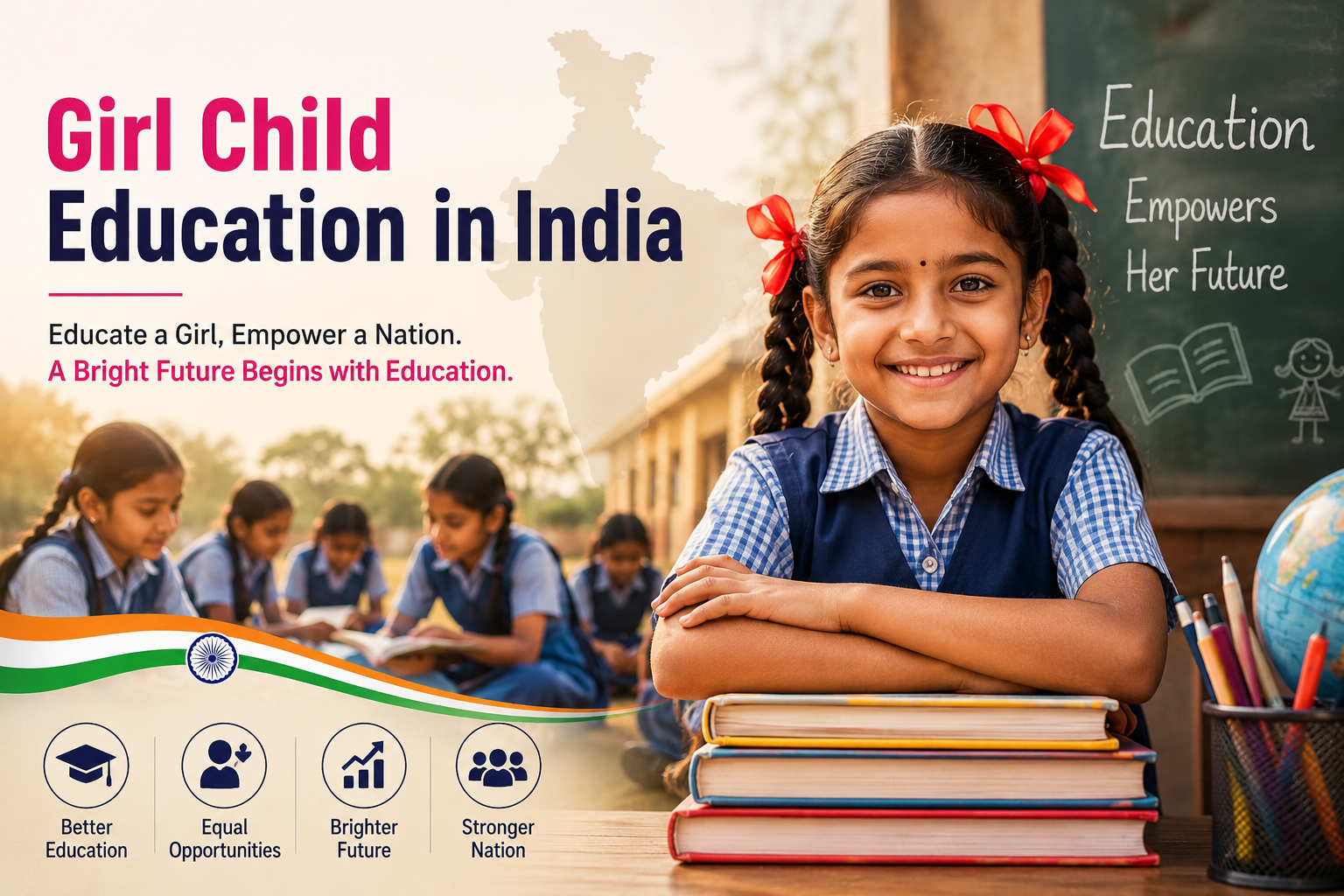
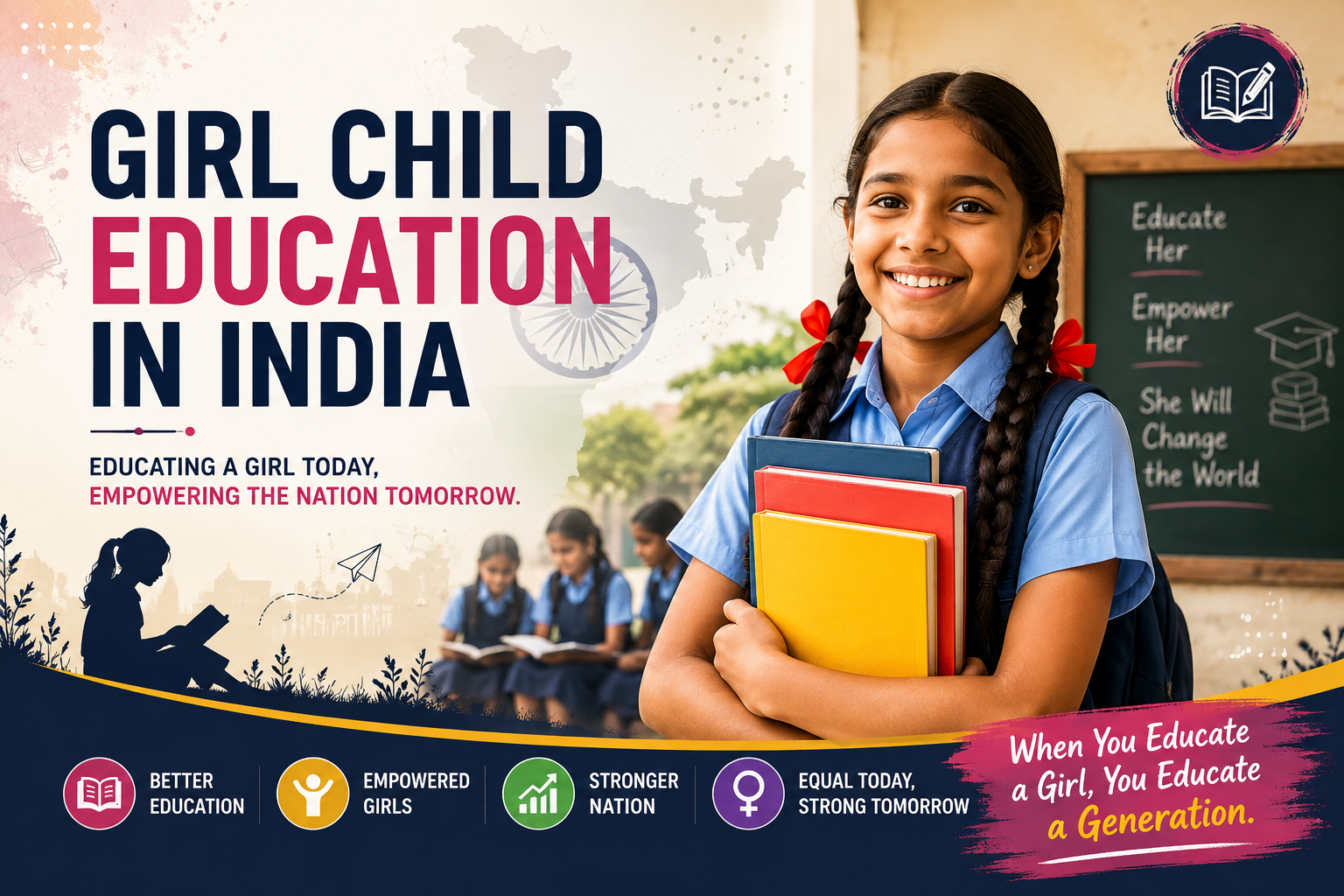
Education is one of the most powerful tools for transforming lives and building a stronger society. It equips children with knowledge, confidence, and life skills that help them become responsible citizens. When girls receive quality education, the benefits extend far beyond individual success. Educated girls contribute to healthier families, stronger communities, and a more prosperous nation.
The importance of girl child education in India has grown significantly over the past few decades. Governments, schools, communities, and Non-Governmental Organizations (NGOs) are working together to ensure that every girl has the opportunity to learn and build a better future. Although India has made remarkable progress, many girls still face challenges such as poverty, gender discrimination, limited access to schools, and early marriage.
Investing in girls’ education is not just about ensuring equality; it is about creating a brighter future for the entire country. This article explores the importance of girl child education in India, its benefits, the challenges girls continue to face, and how NGOs and communities can help create equal educational opportunities.
What is Girl Child Education?
Girl child education refers to providing equal, quality, and inclusive education to every girl from primary school to higher education. It ensures that girls have the same opportunities as boys to develop knowledge, life skills, confidence, and leadership qualities.
Education empowers girls to become independent individuals who can make informed decisions, achieve financial independence, and contribute positively to society. It is not only about attending school but also about creating a safe and encouraging learning environment where every girl can reach her full potential.
Why is Girl Child Education in India Important?
Every girl deserves the opportunity to learn, dream, and succeed. Girl child education in India plays a vital role in building an educated, healthy, and economically strong nation. When girls receive education, they become confident women who can support their families, participate in the workforce, and contribute to social development.
Education also helps girls understand their rights, make informed decisions about their future, and become active members of society. An educated girl often inspires future generations by ensuring that her own children also receive quality education.
Furthermore, educating girls helps reduce poverty, improve public health, and promote gender equality, making it one of the most effective investments for national development.
Benefits of Girl Child Education
The benefits of girl child education in India extend beyond classrooms and create long-term positive change for individuals, families, and society.
Promotes Gender Equality
Education gives girls equal opportunities to learn, grow, and achieve their goals. It helps eliminate gender discrimination and encourages equal participation in education, employment, and leadership.
Improves Economic Growth
Educated women are more likely to secure better jobs, start businesses, and contribute to the country’s economy. Their financial independence also improves the standard of living for their families.
Better Health and Well-being
Education increases awareness about nutrition, hygiene, healthcare, and family well-being. Educated women are more likely to make informed health decisions for themselves and their children.
Reduces Poverty
Education creates employment opportunities that help families become financially stable. Over time, this contributes to reducing poverty and improving living standards.
Strengthens Future Generations
An educated mother values education and encourages her children to attend school. This creates a cycle where education continues to benefit future generations.
Challenges Facing Girl Child Education in India
Despite continuous progress, girl child education in India still faces several challenges that affect millions of girls across the country.
Financial Constraints
Many families cannot afford educational expenses such as books, uniforms, transportation, and school supplies. As a result, some girls leave school at an early age.
Social and Cultural Barriers
In certain communities, traditional beliefs still prioritize boys’ education over girls’. Such attitudes reduce educational opportunities for girls and increase school dropout rates.
Early Marriage
Early marriage continues to interrupt the education of many girls. Once married, they often lose opportunities to continue their studies and build independent careers.
Lack of Educational Infrastructure
Many rural and remote areas still lack proper schools, trained teachers, transportation facilities, and sanitation infrastructure, making education difficult for girls.
Safety Concerns
Parents often worry about the safety of girls while traveling to school or studying in areas where educational facilities are limited.
Government Initiatives Supporting Girl Child Education
The Government of India has introduced several initiatives to strengthen girl child education in India and encourage equal learning opportunities for girls.
These programs focus on increasing school enrollment, reducing dropout rates, improving educational infrastructure, providing scholarships, and creating awareness about the importance of girls’ education.
Although government initiatives have produced positive results, long-term success depends on collaboration between educational institutions, NGOs, communities, and families.
The Role of NGOs in Promoting Girl Child Education
Non-Governmental Organizations play a crucial role in promoting girl child education in India by reaching communities where educational support is most needed.
Many NGOs organize scholarship programs, distribute educational materials, provide learning support, conduct awareness campaigns, and encourage parents to send their daughters to school. They also work with local communities to reduce dropout rates and improve learning outcomes.
By empowering girls through education, NGOs help create stronger families, healthier communities, and a more inclusive society.
How Communities Can Support Girl Child Education
Every individual has a responsibility to support girls’ education.
Parents should provide equal educational opportunities to both sons and daughters. Teachers can encourage girls to participate confidently in classrooms, while community leaders can spread awareness about the long-term benefits of educating girls.
Businesses and individuals can also contribute by sponsoring scholarships, donating educational resources, volunteering with NGOs, and supporting community education programs.
When communities work together, lasting social change becomes possible.
How Anupama Foundation Supports Girl Child Education
At Anupama Foundation, we believe that education is the foundation of empowerment and social progress. Our mission is to encourage girl child education in India by supporting initiatives that help girls access quality learning opportunities regardless of their background.
Through community awareness programs, educational support, and partnerships with local communities, we strive to ensure that every girl has the confidence, knowledge, and opportunities needed to build a successful future.
We believe that educating one girl has the power to transform an entire family and inspire future generations.
Conclusion
Girl child education in India is much more than providing access to schools—it is about creating equal opportunities, building confidence, and empowering girls to achieve their dreams. Educated girls become leaders, professionals, entrepreneurs, and responsible citizens who contribute to the nation’s growth.
Although challenges such as poverty, social barriers, and unequal educational access still exist, continuous efforts by governments, NGOs, schools, families, and communities are creating meaningful change.
By investing in girl child education in India, we are investing in a stronger, more inclusive, and prosperous future where every girl has the opportunity to learn, grow, and succeed.
Frequently Asked Questions (FAQs)
1. Why is girl child education in India important?
Girl child education in India is important because it promotes gender equality, reduces poverty, improves healthcare outcomes, strengthens families, and contributes to the country’s social and economic development.
2. What are the major challenges to girl child education?
Some of the major challenges include poverty, social discrimination, early marriage, lack of educational infrastructure, safety concerns, and unequal access to quality education.
3. How do NGOs support girl child education?
NGOs provide scholarships, educational materials, awareness campaigns, community outreach, skill development programs, and learning support to encourage girls to continue their education.
4. How does educating girls benefit society?
Educated girls help build stronger families, healthier communities, economic growth, and better educational outcomes for future generations.
5. How can individuals support girl child education?
Individuals can support girls’ education by encouraging equal opportunities, volunteering with NGOs, sponsoring educational initiatives, donating school supplies, and spreading awareness about the importance of educating girls.
Together, Let’s Empower Every Girl Through Education
Every girl deserves the opportunity to learn, dream, and build a brighter future. At Anupama Foundation, we are committed to promoting quality education, empowering girls, and creating opportunities that help them become confident and independent individuals.
Your support can make a meaningful difference. Whether you choose to volunteer, donate, partner with us, or simply spread awareness, every contribution helps us move one step closer to a society where every girl has access to education and equal opportunities.
Join Anupama Foundation today and become a part of the journey to empower young minds, strengthen communities, and build a better future for India.